

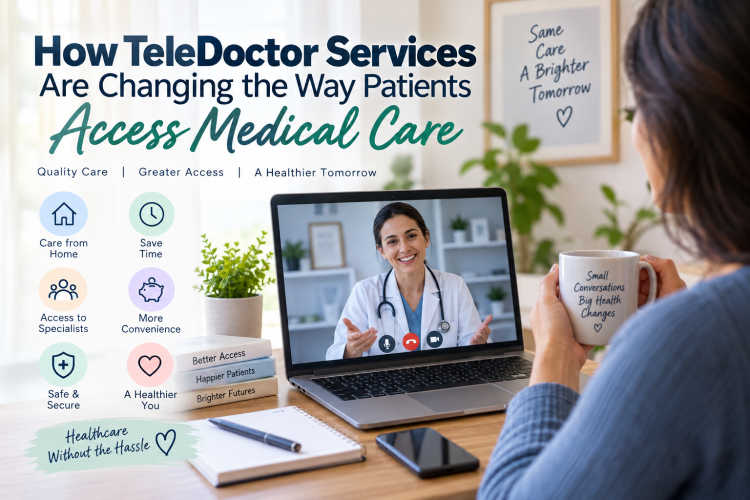
What if you could talk to a doctor without sitting in a crowded waiting room? TeleDoctor services are making that possible by bringing medical consultations to phones, tablets, and computers. They offer convenient access to healthcare, reduce travel time, support follow-up care, and help patients connect with providers from home.
🩺 What Are TeleDoctor Services?
TeleDoctor services let patients consult healthcare professionals through digital communication tools. Depending on the provider, a consultation may happen through video calls, phone calls, or secure messaging. Patients can discuss symptoms, ask health questions, review test results, and receive medical guidance remotely. This approach is part of the broader telehealth and telemedicine industry.
The biggest change is simple: medical care no longer always requires a trip to a clinic. A patient with a minor concern can often speak with a doctor from home. Someone managing an ongoing condition may also use virtual visits for regular check-ins. However, telehealth does not replace every in-person medical visit.
📱 Why More Patients Are Choosing Virtual Care
Convenience is one of the main reasons patients turn to virtual healthcare. Instead of driving to an office, finding parking, and waiting for an appointment, patients can connect from a private location. This can be especially helpful for people with busy schedules, limited transportation, or mobility challenges. It also makes healthcare easier to fit into everyday life.
TeleDoctor platforms can also reduce the time spent away from work or family. A short virtual appointment may require far less planning than a traditional visit. That flexibility can make people more willing to seek medical advice when they need it. As digital healthcare becomes more familiar, virtual consultations are becoming a practical part of modern care.
| Traditional Healthcare | TeleDoctor Services |
| Travel to a medical office | Connect remotely |
| Waiting room may be required | Often no waiting room |
| Fixed location | Access from many locations |
| In-person consultation | Video, phone, or messaging |
| Travel time can be significant | Little or no travel |
🚗 Better Access For People In Remote Areas
TeleDoctor services can help close gaps in healthcare access. People living in rural areas may have fewer doctors and specialists nearby. Traveling to the nearest medical facility can take hours, especially for specialty care. A virtual appointment can remove some of that geographic barrier.
This does not mean every medical problem can be handled remotely. Some conditions require physical examinations, imaging, lab work, or emergency treatment. Still, remote healthcare can serve as an important first step. It can help patients understand whether they need immediate care, routine care, or an in-person evaluation.
⏰ Saving Time For Patients And Providers
Time is another major benefit of telemedicine. Patients may avoid commuting, parking, and long periods in waiting rooms. Providers can also use virtual appointments for suitable follow-ups and routine consultations. This can make some healthcare workflows more efficient.
For patients, the difference can be meaningful. Consider someone who needs a quick follow-up after starting a medication. If the doctor only needs to discuss symptoms and progress, a virtual visit may be practical. The patient gets medical attention without spending hours traveling for a short conversation.
👩⚕️ Making Follow-Up Care Easier
Ongoing care often requires regular communication between patients and healthcare providers. TeleDoctor services can make those conversations easier to schedule. Doctors may review symptoms, discuss treatment progress, or answer questions during virtual appointments. Patients can also report changes without automatically arranging a full office visit.
This can be useful for many types of routine healthcare management. For example, a provider may use telehealth to check how a patient is responding to treatment. The doctor can then decide whether another virtual visit is enough or whether an in-person appointment is necessary. That flexibility creates a more connected care experience.
💡 Common Uses Of TeleDoctor Care
Patients may use virtual healthcare for several situations, including:
- Routine medical consultations
- Follow-up appointments
- Medication discussions
- Reviewing certain test results
- Mental health consultations
- Health education and guidance
- Some minor illnesses and symptoms
- Chronic condition check-ins
🔐 Privacy And Security Still Matter
Convenience should never come at the expense of privacy. TeleDoctor platforms often handle sensitive personal and medical information. Patients should understand how their information is collected, stored, and shared before using a healthcare platform. A secure connection and responsible data practices are essential.
Patients should also choose reputable healthcare providers and use private spaces for consultations. Avoid discussing sensitive health information over unsecured public networks when possible. Strong passwords and account security can provide another layer of protection. Good digital habits make virtual healthcare safer and more comfortable.
💻 The Technology Behind Virtual Healthcare
TeleDoctor services depend on several technologies working together. Video conferencing allows patients and providers to communicate face-to-face. Secure messaging can support questions and follow-ups. Electronic health records can help providers access relevant patient information during care.
Some platforms also connect with digital health tools. These may include wearable devices, remote monitoring equipment, or home health measurements. Depending on the service, patients may share information such as blood pressure or glucose readings. Technology is gradually turning healthcare into a more connected experience.
| Telehealth Technology | How It Helps Patients |
| Video consultation | Supports face-to-face virtual visits |
| Secure messaging | Enables questions and follow-ups |
| Electronic records | Helps organize medical information |
| Remote monitoring | Shares selected health measurements |
| Mobile apps | Makes healthcare access more convenient |
🌎 Expanding Access To Specialists
Finding a specialist can sometimes be difficult, particularly when local options are limited. Telemedicine can connect patients with providers who may not practice nearby. This can be valuable when patients need expert advice but cannot easily travel.
Virtual specialist consultations may also support coordination between healthcare professionals. A primary care provider and specialist can work together when appropriate. Patients may spend less time arranging separate appointments. Better communication can lead to a smoother healthcare journey.
💰 Can TeleDoctor Services Reduce Healthcare Costs?
Telehealth may reduce certain costs, but savings depend on the situation. Patients can save money on transportation, parking, and time away from work. Some virtual healthcare services may also have different pricing structures than traditional visits. Insurance coverage and provider policies vary, so patients should check costs before scheduling.
The financial benefit is not simply about paying less for an appointment. Convenient access may also help people seek care earlier. Earlier medical guidance can sometimes prevent a minor issue from becoming more complicated. Still, patients should never delay emergency care because a virtual visit seems cheaper or easier.
❤️ Improving The Patient Experience
Healthcare can feel stressful when patients have to navigate unfamiliar clinics and long waits. TeleDoctor services can make the process feel more personal and convenient. Patients can speak with a provider from a familiar environment. For some people, that setting can make it easier to explain concerns.
There is also a practical advantage for caregivers. A family member may be able to help a patient prepare for a virtual appointment from home. Patients can keep relevant medications or health records nearby during the conversation. Small conveniences can make a major difference in the overall patient experience.
⚠️ When TeleDoctor Services Are Not Enough
Virtual healthcare has limits. A doctor cannot perform every physical examination through a screen. Some symptoms require hands-on assessment, diagnostic testing, or immediate treatment. Emergency symptoms should always receive appropriate emergency medical attention rather than waiting for a routine virtual appointment.
Telehealth works best when used for the right type of care. Patients should describe their symptoms clearly and follow the provider’s recommendations. If the provider recommends an office visit, testing, or urgent evaluation, that advice should be taken seriously. Telemedicine should complement in-person healthcare, not replace it completely.
🔮 The Future Of Telehealth And Patient Care
The future of telehealth will likely involve even greater integration between virtual and traditional healthcare. Patients may move between video visits, clinic appointments, remote monitoring, and digital health tools as needed. This creates a more flexible model instead of forcing every patient into one type of care.
Artificial intelligence and connected devices may also influence how providers monitor patients and organize information. However, technology will still need human judgment and professional medical oversight. The goal is not to make healthcare purely digital. The goal is to make good healthcare easier to access when appropriate.
📊 What Patients Should Look For In A TeleDoctor Service
Choosing a virtual healthcare provider deserves careful consideration. Not every platform offers the same services, technology, or provider access. Before booking, patients should understand what the service actually provides.
A few important factors include:
- Qualified healthcare professionals: Check who provides the consultation.
- Privacy practices: Understand how personal information is handled.
- Appointment options: Look for hours that fit your schedule.
- Follow-up care: Find out what happens after the consultation.
- In-person referrals: Make sure the provider can recommend further care when needed.
- Cost and insurance: Confirm pricing before the appointment.
| What To Check | Why It Matters |
| Provider credentials | Supports trustworthy medical care |
| Privacy protections | Helps protect sensitive information |
| Appointment availability | Makes care easier to access |
| Follow-up options | Supports continued treatment |
| Pricing | Helps avoid unexpected costs |
| Emergency guidance | Clarifies when in-person care is needed |
🌟 The Bigger Impact On Modern Healthcare
TeleDoctor services are changing healthcare by making access more flexible, connected, and convenient. Patients can communicate with healthcare professionals without always traveling to a clinic. Providers can use virtual visits for suitable consultations and follow-up care. This can create a healthcare experience that better fits modern lifestyles.
At the same time, patients should understand the limits of virtual care. Not every condition can or should be treated remotely. The strongest healthcare model combines digital convenience with appropriate in-person treatment. As technology improves, telehealth can become an increasingly useful bridge between patients and medical professionals.
🏁 Conclusion: A More Connected Way To Access Care
TeleDoctor services are reshaping how patients access medical care by removing some of the traditional barriers to healthcare. Virtual consultations can save time, reduce travel, support follow-up appointments, and improve access for people in underserved locations. They also give patients another way to communicate with healthcare professionals.
The key is knowing when telehealth makes sense and when in-person care is necessary. Used responsibly, telemedicine can complement traditional healthcare rather than compete with it. As digital tools continue to evolve, patients can expect healthcare access to become more flexible and connected.
❓ Frequently Asked Questions
Can TeleDoctor Services Replace A Doctor Visit?
TeleDoctor services can replace some routine or suitable medical visits. They cannot replace care that requires a physical examination, testing, or emergency treatment. Your healthcare provider can determine which type of visit is appropriate.
Are TeleDoctor Appointments Safe And Private?
Reputable telehealth services use security measures to protect patient information. Patients should review a provider’s privacy practices before using the service. Private surroundings and secure internet connections can also improve confidentiality.
What Can A TeleDoctor Doctor Treat?
TeleDoctor providers can address many suitable health concerns through virtual consultations. These may include some minor illnesses, follow-ups, medication discussions, and routine healthcare needs. The provider can recommend in-person care when remote treatment is not appropriate.
Is TeleDoctor Care Cheaper Than In-Person Care?
TeleDoctor care may cost less in some situations, but prices vary by provider and insurance plan. Patients may also save money on transportation, parking, and missed work. Always check the consultation fee and insurance coverage beforehand.
How Do I Choose A TeleDoctor Service?
Look for qualified healthcare professionals, strong privacy practices, clear pricing, and convenient appointment options. Check whether the service provides follow-up care and referrals when needed. A trustworthy platform should clearly explain what its virtual healthcare service includes.




Leave a Reply